The overall goal of the project is to achieve a lower greenhouse gas emissions growth path and increased resilience to climate change vulnerabilities in select Indian cities and states
Cities in general consume two-thirds of the global energy.
Cities account for over 70 percent of energy-related greenhouse gas (GHG) emissions that drive global climate change.
India is the fourth largest greenhouse gas emitter in the world and with the accompanying rapid urbanization.
There is an urgent need for climate action especially across its 4000 plus urban centers.
Consortium of South Pole Carbon Management Ltd., ICLEI South Asia and econcept , NIUA.
Municipal Corporations and city-level authorities of Coimbatore, Rajkot, Siliguri Udaipur, Tirunelveli.
Coimbatore (Tamil Nadu), Rajkot (Gujarat), Siliguri (West Bengal) and Udaipur (Rajasthan).
Capacities of city authorities in four partner cities to plan and implement climate change mitigation and adaptation measures enhanced.
City-level climate change mitigation measures for priority sectors initiated.
City-level climate change adaptation measures for priority sectors initiated.
Awareness on low carbon and climate resilient city development increased in India and other countries.
Consortium of South Pole Carbon Management Ltd., ICLEI South Asia and econcept , NIUA.
Municipal Corporations and city-level authorities of Coimbatore, Rajkot, Siliguri Udaipur, Tirunelveli, Tiruchirapalli, Vadodara, Ahmedabad.
Coimbatore, Tirunelveli, Tiruchirapalli (Tamil Nadu), Vadodara, Ahmedabad, Rajkot (Gujarat), Siliguri (West Bengal), and Udaipur (Rajasthan).
City and state governments integrate climate change aspects (adaptation and mitigation) into urban planning and implementation.
Enhanced capacities of city and state governments to access finance for scaled up urban climate action.
Enhanced knowledge on accelerating city climate action at the national and global level.
Consortium of South Pole Carbon Management Ltd., ICLEI South Asia, econcept AG, and National Institute of Urban Affairs (NIUA)
Municipal Corporations and state-level authorities of Ahmedabad, Coimbatore, Rajkot, Tirunelveli, Tiruchirapalli, and Vadodara.
Coimbatore, Tirunelveli, Tiruchirapalli (Tamil Nadu), Vadodara, Ahmedabad, Rajkot (Gujarat),
Institutionalise comprehensive net-zero climate action in select Indian cities and states
Cities and States are equipped with financial tools/instruments that help them prepare climate investment plans and develop projects to mobilise and access climate finance on their own.
Knowledge is enhanced at the state and national level for upscaling city climate action.
The project is supporting city and state governments to integrate climate change aspects (adaptation and mitigation) into urban planning and implementation.
In Phase 1, a comprehensive ClimateResilientCities methodology addressing both climate change adaptation and mitigation aspects to support cities in developing and implementing a local climate resilience action plan, however this requires significant time and resources lacking thereof in Indian cities.
In Phase 2, a more simplified process that is robust, has a strong monitoring and evaluation framework and with linkage to the Climate Smart Cities Assessment Framework of the Ministry of Housing & Urban Affairs has been developed.
Phase 3 project cities are encouraged to use this simplified methodology to quickly prepare an abridged climate resilient city action plan and then enhance their actions through adoption of the comprehensive methodology.
Quick win projects, fully funded pilot implementation projects, will be implemented in the new cities to demonstrate their high potential for replicability and scale-up through government programs and missions.
CapaCITIES project will also engage at the state level with Urban Development and Town and Country Planning Departments to anchor the Climate Resilient Cities process and to encourage and support the inclusion of climate considerations in planning and development guidelines.
Project will provide in depth training to the state level technical institutes and local professionals, who will thereby provide the requisite training to the cities, necessarily, beyond the life of the project.
project will support cities and improve cities’ capacities to raise a variety of resources for pursuing climate action, overcoming limitations and utilizing opportunities. It will augment city level resources especially voluntary financing by working effectively with key stakeholders at local levels.
Project will support the creation of a “local climate financing community”, comprising project finance oriented stakeholders such as financial institutions, CSR heads of major corporates in the state, trade bodies, market associations and infrastructure developers.
Project will assess potential projects, establish a pipeline of bankable projects and will support cities with an aim to to get at least 1 project in each city to a stage of Project with Bankability Report.
Projects will complement the efforts on the public side by supporting the cities in mobilizing financing for the bankable projects through multiple channels such as strategic partnerships, green financing mechanisms, matching of financing possibilities with sectoral financing schemes for cities in India and from the private sector.
In order to replicate and multiply the direct project support in structuring and access to finance projects will provide an analysis of lessons learnt, develop standard contracts, guidance documents and learning toolkits as a basis for capacity building activities.
Project will enhance knowledge on accelerating city climate action at the national and global level through its knowledge sharing and peer learning activities.
In Phase 2, CapaCITIES project will aim to inform national policies and integrate elements of the ClimateResilientCities process in national frameworks.
Project is supporting partner cities in reporting climate actions to national and global platforms to create visibility and also to explore options of accessing international finance.
Project has engaged NIUA as a knowledge partner to ensure support in making linkages at the national and state level and include project learnings and results in national programmes/ policies/ missions and/or regulations to spur climate actions in Indian cities
CapaCITIES Phase II project will also reach out to the global climate community with an aim to showcase project results globally and to feature CapaCITIES cities’ climate action and climate action plans and proposals globally, with an aim to attract further technical support, access to technology and better access to international finance.
Dr. Jonathan Demenge is currently the Head of cooperation for the Swiss Agency for Development and Cooperation in India. He was previously the Country director of the international NGO Geres in Tajikistan, working on energy efficiency in housing and agriculture. Trained as an anthropologist, Dr. Jonathan holds a PhD from the Institute of Development Studies (IDS) in political ecology (on road construction in Ladakh). He calculated the first ecological footprint of subsistence farmers (in Ladakh). He has worked for the Netherlands Development Organization, the Overseas Development Institute, various NGOs, and as a researcher in Nepal, India, Tajikistan, Ethiopia, and West Africa.
Sakshi C. Dasgupta, is the Senior Thematic Advisor with the Swiss Agency for Development and Cooperation (SDC). She is managing projects like CapaCITIES, Clean Energy Policy etc. and is responsible for SDC’s Urban and Environment portfolio. She has more than 15 years of professional experience in the urban development/environment sector. She was earlier associated with the German Development Cooperation (GIZ) on projects related to Sustainable Development of Smart Cities and Support to National urban Sanitation Policy in various states and cities. She has worked with organizations like TERI, Centre for Science and environment (CSE) on aspects related to water resource management, green buildings amongst others. She has extensive experience working with reputed bilateral organizations for development cooperation, research/ advocacy institutes, and state and city governments. Sakshi holds a master degree in urban and regional planning from the Centre for Environment Planning and Technology (CEPT), Ahmedabad. She completed her masters and bachelor’s degree from the Delhi School of Economics and Miranda House, Delhi University respectively.
Andrin is a Programme Officer at the Swiss Agency for Development and Cooperation (SDC). He is currently overseeing the SDC’s global engagements on renewable energy and energy access and various other climate-related initiatives. Prior to his current position, Andrin has worked for the SDC on climate change mitigation in India and has held various positions in the private sector in emission reduction project development and sustainability management consulting. Andrin holds a Master of Environmental Sciences from the Swiss Federal Institute of Technology in Zurich and a Certificate of Advanced Studies in General Management from University of St. Gallen in Switzerland.
Emani Kumar has been the Executive Director of ICLEI-Local Governments for Sustainability, South Asia since its founding in 2005. Apart from overseeing the organisation’s strategic development, he also coordinates various multi-year and small scale projects and research work supported by various donors including UN agencies; State and National Governments of India and Research Organizations. He has more than eighteen years of professional experience on issues related to climate change policy and planning, local governance, renewable energy and energy efficiency, social accountability, systems management and auditing. He is the Co-Team Leader of the CapaCITIES project.
Hans-Peter has a master’s degree in Economics and more than 25 years of experience in international cooperation in the areas of trade, production, investment and infrastructure including environment and social issues. He acquired in-depth know-how regarding cooperation with businesses and financial entities of all kinds such as the World Bank, regional development banks, various UN organizations, non-governmental organizations, industries and retailers in Switzerland and in developing countries, as well as government agencies. He has 20 years of experience in innovative project management at the interface between the economy, environment and development cooperation. Through these programmes and projects, SECO acquired an international profile as an innovative agency for the promotion of sustainable trade. Switzerland gained a more credible presence in the negotiation of programmes accompanying free trade agreements with developing and emerging countries.
Reto Dettli is Managing Partner of econcept and has a broad experience in elaboration of sustainability strategies for cities and public authorities on state level in different countries worldwide. He is within the CapaCITIES project, responsible for the development of tools for city level mitigation and adaptation planning. He supports the local experts in the elaboration of climate profiles, the preparation of the city climate action plans, preparation of regulatory measures, strategies for increasing awareness on low carbon and climate resilient city development and the dissemination of project experiences to Indian cities and cities in other countries.
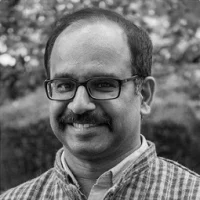
ICLEI South Asia

Deputy Co-team Leader & State Coach – Tamil Nadu

State Project Associate, Gujarat


ICLEI South Asia

ICLEI South Asia

ICLEI South Asia
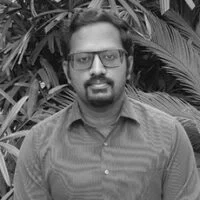
Climate Mitigation Expert

ICLEI South Asia

ICLEI South Asia

ICLEI South Asia

ICLEI South Asia

ICLEI SA
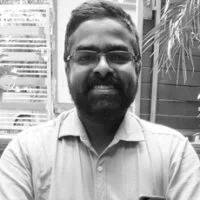
IT Expert

City Coach – Siliguri

Senior Climate Change Adaptation Expert
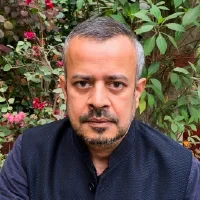
ICLEI South Asia
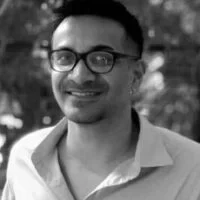
Climate Change Mitigation Expert

Climate Change and Communications Expert
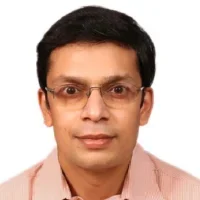
Southpole

Southpole

Econcept AG
Econcept AG