Udaipur

The city of Udaipur is located in southern Rajasthan in a fertile valley well-protected by the elevated Aravalli Hills which also separates it from the Thar Desert. The city’s inter-connected lake systems and popular history and culture makes it a major tourist destination in the region. Its economy is driven by its marble industry and tourism.
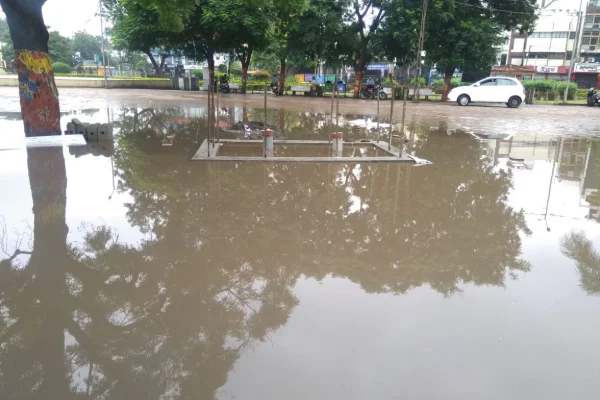
Udaipur has a semi-arid climate with a hot dry summer and bracing cold winter. The winter season lasts from November to February with temperatures ranging from 5 °C to 30 °C and is followed by the summer season from March to June when temperatures range from 23 °C to 44 °C. Southwest monsoon brings rainfall to the region from the last week of June to mid-September and about 90% of the total rainfall occurs during this period. July and August are the wettest months of the monsoon season and the average annual rainfall for the area is 640 mm.
Udaipur city developed their GHG emissions inventory and Climate Resilient Cities Climate Action Plan (CRCAP) in 2018 with support from the CapaCITIES project to identify priority sectors from a climate change mitigation and adaptation perspective. The climate action plan was approved by its city council in June 2019 and can be accessed here. The Climate action planning for Udaipur can be found in the link below.

Quick-win Projects

Quick-win Projects

Deployment of 18 Electric Rickshaws as a Pilot Initiative

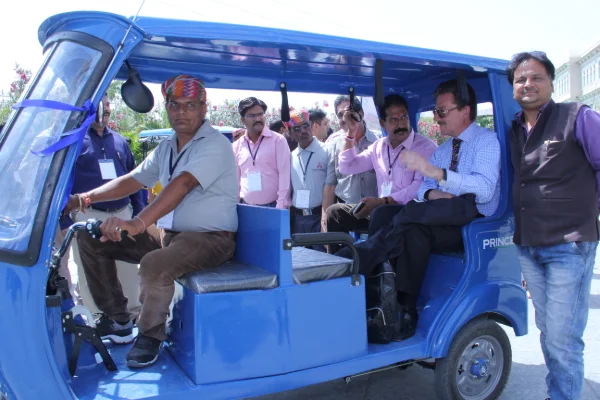
CapaCITIES project assisted Udaipur city to implement a pilot initiative to evaluate the technical capacity and workability of e-rickshaws in the context of Udaipur with its peculiar terrain and user base.

The project deployed 18 e-rickshaws of different types, specification and technology and tested their performance on city roads and prepared a case study on the e-rickshaw operations for the city to scale-up the low carbon IPT system especially faster deployment of E-rickshaws. Annual emission reduction from the pilot project includes 45.62 tCO2e of GHG emission, 261 kg of NOx and 132 kg of particulate matter.
Solid Waste Management System at Selected Wards of Udaipur

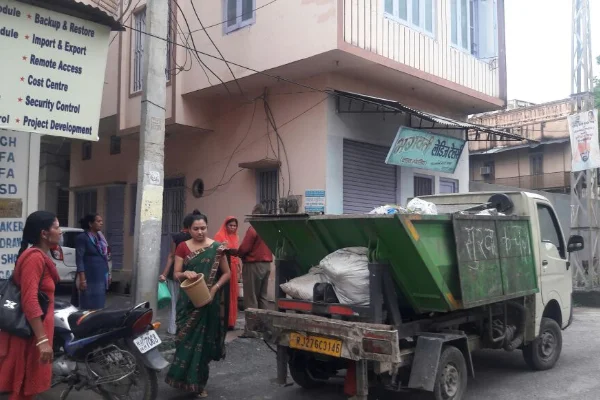
CapaCITIES project team implemented the SUNYA – Zero Waste Wards initiative in ward no. 1 and 41 of Udaipur which successfully achieved household level source segregation of biodegradable waste.

Approximately 3500 households and commercial entities were initiated to waste segregation practices on a pilot scale. Based on a quantification and characterization study of waste from the two wards, a decentralized 2 TPD biomethanation plant was designed and installed to process the 2.65 tonnes of mixed waste generated daily from the two wards. The annual GHG emission mitigation potential of the is 1,437 tCO2e.
Installation of Ambient Air Quality Monitoring Stations (AAQMS)

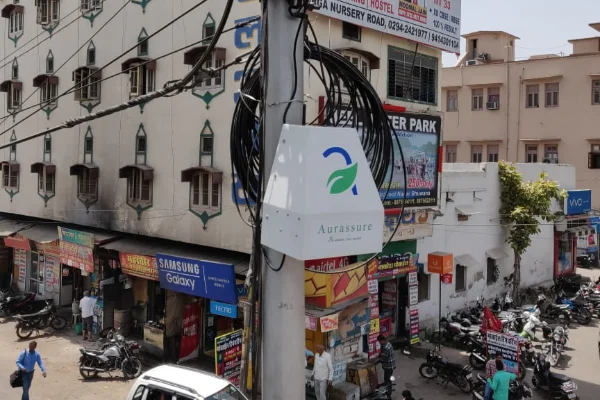
Four locations in Udaipur were identified and 4 sensor based AAQMS were installed to improve the availability of air quality data from multiple locations and also for regular monitoring.

The city corporation staff were also trained on monitoring AAQMS and air quality data. The city initially only had one continuous ambient air quality monitoring station. The deployment of four additional sensor based AAQMS improved the availability of air quality data from multiple locations, which helped prepare relevant policies to improve air quality.
Bankable Projects

Bankable Projects

Development of Walled City as a Green Mobility Zone (GMZ)

Walled city houses major economic and tourist destinations in Udaipur, due to large floating population congestion and air pollution has been identified as a key issue.
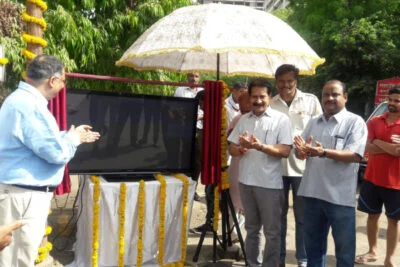
The project is supporting development of the walled city as a Green Mobility Zone- access controlled area with amenities to support and promote electric mobility. The project post implementation is expected to result in significant reduction in transport led GHG emission and also improve the tourism aesthetic value of the walled city.

Technical Assistance

Technical Assistance

Development of Intermediate Para Transit (IPT) Action Plan

In the absence of robust public transport in Udaipur, IPT is a preferred mode of travel in the city which caters to more than 11% of trips in the city and provides employment (directly or indirectly) to a significant population.
An action plan for IPT was developed with an aim to reduce the transport emissions per km in the city by making IPT more sustainable mode of transport, and allowing for its integration with the public transport enabling an increase in its ridership.

Solutions and for the Scientific Closure of Tithardi Dumpsite

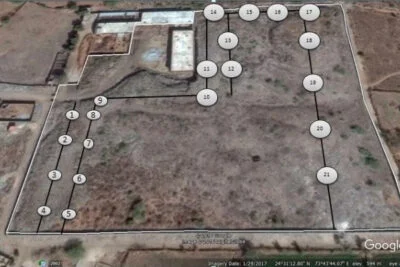
Assessing the non-operational Tithardi dumpsite with mixed waste, revealed that there was no active landfill gas emissions from the dumpsite and waste characterization revealed mostly inert waste presence.

Therefore, an appropriate landfill closure method was developed and corresponding tender specifications were also proposed to the city. Accordingly, a tender for the closure of this dumpsite was notified by the Udaipur Municipal Corporation.

Development of City Biodiversity Index in Udaipur

Development of City Biodiversity Index and Natural Asset Map have been developed and the Local Biodiversity Strategy and Action Plan are being developed.