
Cities around the world are facing the negative effects of climate change such as increased floods, droughts and storms, all of which have a costly impact on cities’ basic urban services, infrastructure, and the health and livelihood of its population. At the same time, estimates suggest that cities are responsible for about 75 percent of the global CO2 emissions and a key driver of climate change, necessitating a coordinated approach and climate action at the local level. Thus, it is essential to make cities an integral part of the fight against climate change.
Climate action plans, at a minimum, should include an inventory of existing GHG emissions, reduction goals or targets, and prioritized reduction actions. Ideally, a climate action plan should also include an implementation strategy that identifies required resources and funding mechanisms.
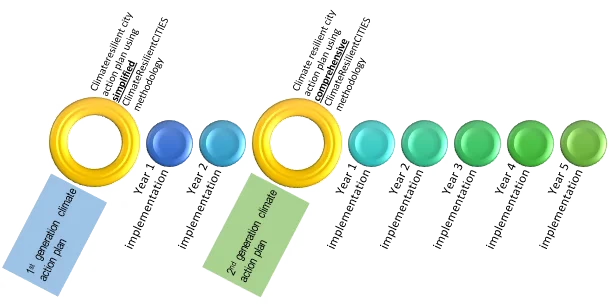
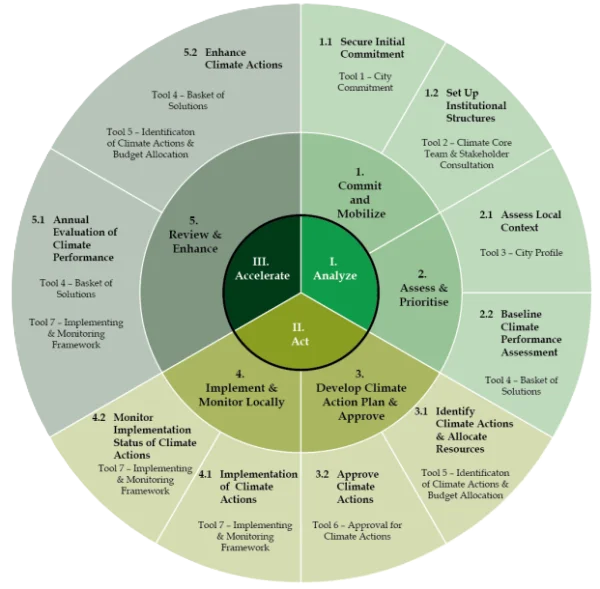
Consequently, the Phase 2 cities adopted the comprehensive Net-zero CRC methodology to develop the Net-zero Climate Resilient City Action Plans aligned with the Net-zero ambitions of the state and national governments. In Phase 3, six cities are being supported to institutionalize the implementation of their Net-zero CRCAPs through dedicated climate governance structures.